


A few years ago, a mate who had been betting profitably on cricket for years told me he was taking a three-month break. His results were fine — up 8% on the year. But he had noticed that his first thought on waking was checking the overnight scores for their impact on his open bets, and his last thought before sleeping was tomorrow’s card. The betting had shifted from a disciplined side pursuit to the central organising activity of his day. He was not losing money. He was losing perspective. That conversation changed how I think about responsible gambling, because it showed me that the problem is not always in the numbers on your balance sheet.
Why Cricket Betting Carries Specific Risks
Cricket’s structure makes it uniquely absorbing for bettors. A Test match runs for five days. An IPL season lasts eight weeks. The County Championship stretches across an entire English summer. The volume of betting opportunities is relentless — you can bet on cricket every single day of the year if you include domestic leagues in India, Australia, Bangladesh, and the Caribbean. That constant availability creates a rhythm where taking a day off feels like missing value, and the line between disciplined engagement and compulsive behaviour blurs gradually.

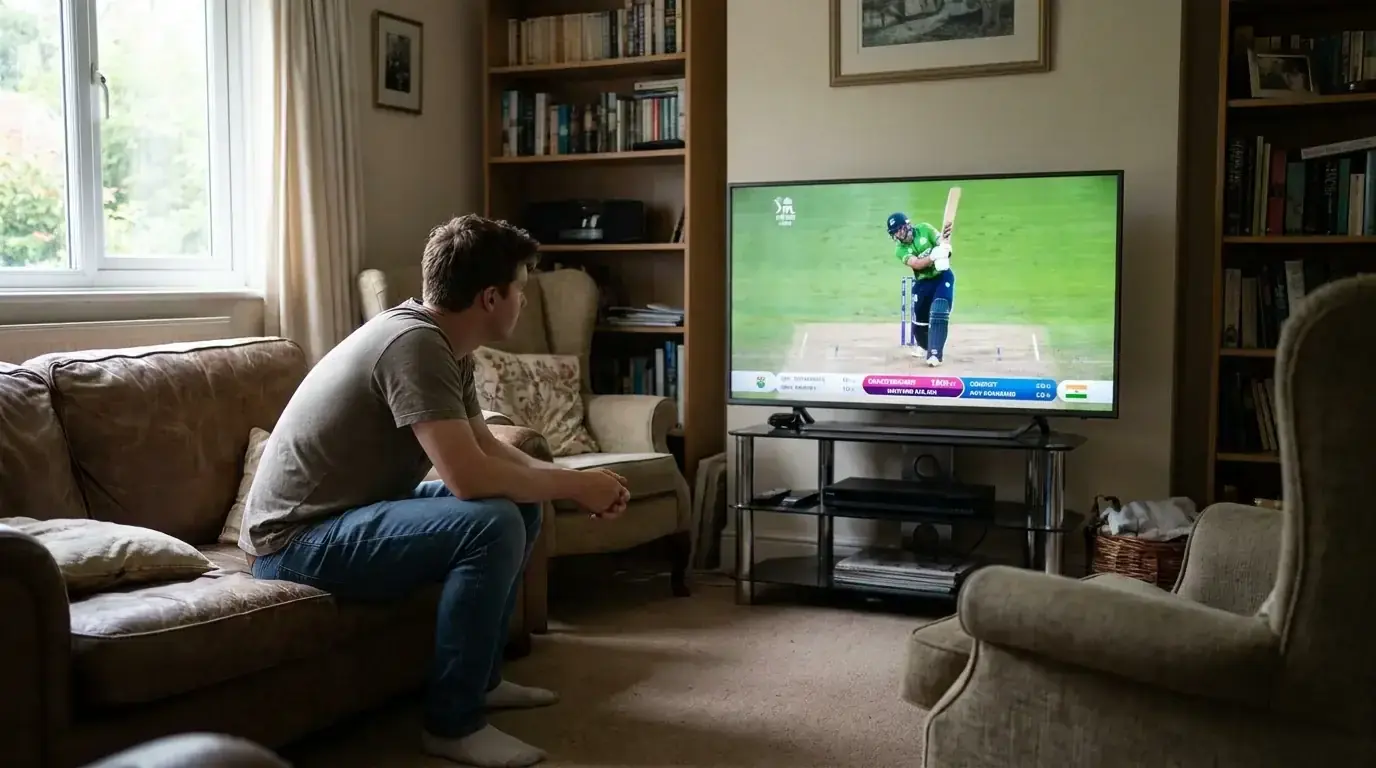
The 18-24 age bracket in the UK carries the highest rate of problem gambling at 5.3% scoring 8-27 on the PGSI scale. That demographic overlaps heavily with the audience for T20 franchise cricket, where fast-paced formats and in-play markets create rapid feedback loops between bet and result. A T20 match lasts three hours. You can place dozens of in-play bets in that window. The speed compresses the emotional cycle of anticipation, outcome, and response into minutes rather than hours or days, which makes it harder to recognise when the pattern is becoming harmful.
Youth participation in gambling rose from 27% in 2024 to 30% in 2025, though the rate of problem gambling within that group remained stable at 1.2%. The increase was driven by informal gambling — private bets between friends — rather than online platforms. But the normalisation of gambling through cricket sponsorship, advertising during matches, and social media tipster culture creates an environment where young people absorb betting as a natural companion to watching sport, long before they have the financial literacy or self-awareness to manage the risks involved.
Recognising the Drift From Disciplined to Compulsive
I have worked alongside sharp bettors for over a decade, and the shift from healthy to harmful rarely happens overnight. It is a drift. The first sign is increasing stake size without a corresponding increase in edge quality — betting more because the emotional need for a larger outcome has overtaken the analytical case for the bet. The second sign is betting on markets or competitions you have not analysed, purely because they are available. The third is spending more time thinking about bets than the activity can justify relative to its role in your life.
One pattern I have noticed specifically among cricket bettors is the “always-on” trap. Because cricket operates across multiple time zones — IPL in the evening, domestic English cricket during the day, Australian cricket overnight — there is no natural break in the schedule. A football bettor has four or five days between match weekends. A cricket bettor can find a live market at nearly any hour. If you find yourself adjusting your sleep schedule to place bets on matches in a different hemisphere, or checking your phone during social events to monitor in-play positions, the activity is demanding more of your attention than a recreational pursuit should.

Self-assessment is tricky because the most problematic patterns feel productive when you are inside them. Staying up to watch the BBL and betting the session markets feels like dedication to your craft. Increasing stake size after a winning run feels like capitalising on momentum. Building complex multi-leg accumulators every day feels like engagement. From the outside, each of those behaviours can look like the early stages of a problem. The honest question is not “am I losing money?” but “would I be doing this activity with the same intensity if there were no money attached?”
Tools and Limits Built Into UK Betting Platforms
Every UK-licensed bookmaker is required by the Gambling Commission to provide deposit limits, loss limits, session time limits, and self-exclusion options. These tools exist because the regulator recognises that willpower alone is insufficient for managing gambling behaviour. I use deposit limits on every account I hold — not because I lack discipline, but because the limit removes the possibility of an impulsive decision during a bad run overriding my usual judgment.
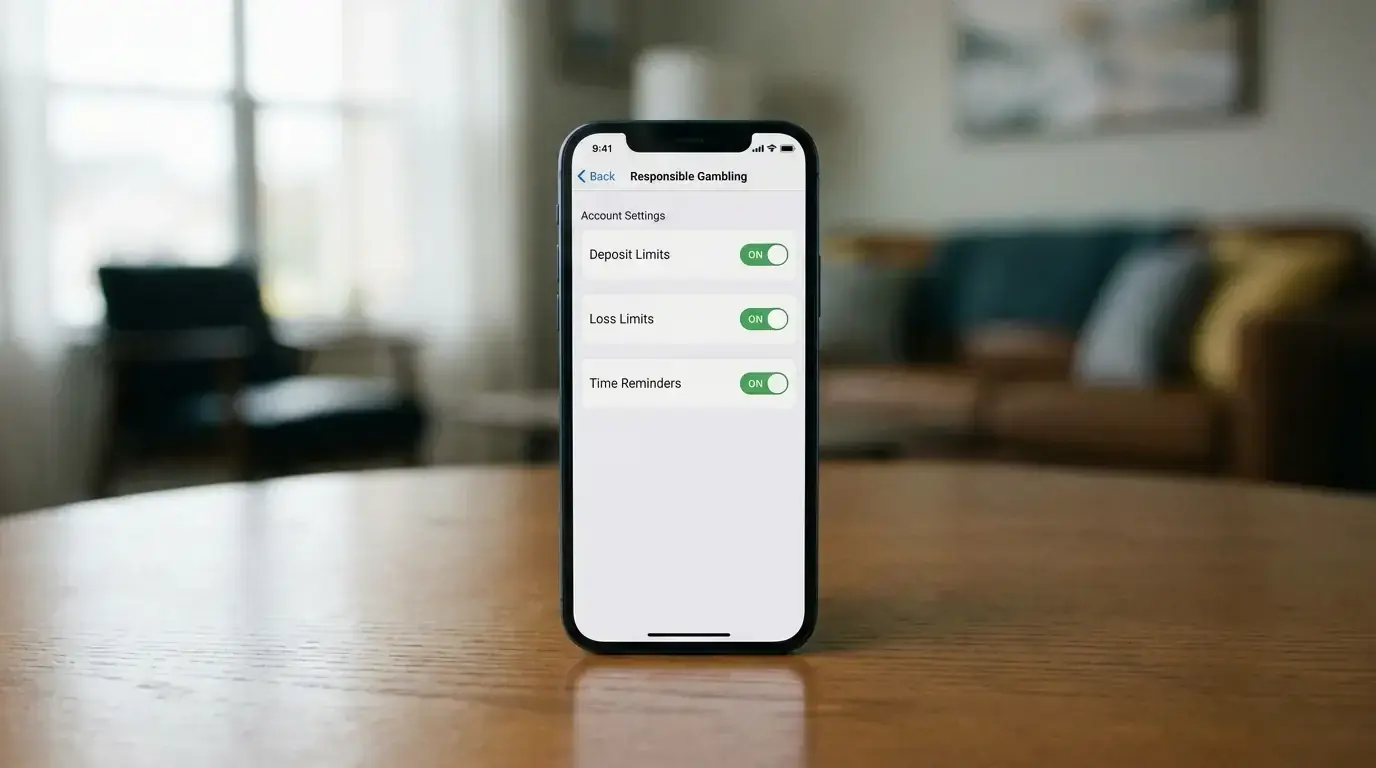
Deposit limits cap how much money you can add to your account within a set period — daily, weekly, or monthly. Loss limits cap how much you can lose before the platform pauses your activity. Session time limits alert you when you have been actively betting for a defined period. Reality checks pop up at intervals to remind you how long you have been on the platform and your net position. Each tool addresses a different failure mode: deposit limits prevent impulse top-ups, loss limits prevent the chase, time limits prevent the trance.
Self-exclusion is the strongest tool available. GAMSTOP is the national self-exclusion scheme that blocks you from all UK-licensed gambling operators for a minimum of six months. Once you register, it cannot be reversed until the chosen period expires. I know three people who have used GAMSTOP, and all three describe it as the single most effective intervention they made. The barrier to re-entry is what makes it work — in a moment of weakness, you cannot simply log back in. For anyone who recognises that their cricket betting has crossed from recreational to harmful, understanding the legal framework around UK cricket betting includes understanding the protections built into that framework.

Building a Sustainable Betting Routine That Protects Your Wellbeing
My routine is built around absence as much as presence. I bet on cricket four days a week maximum. The other three days I do not open a betting account, check odds, or analyse matches. Those off-days are non-negotiable, even during major tournaments when the matches are compelling and the markets are deep. The break prevents the “always-on” pattern from taking hold and gives me a regular reality check on whether the activity still sits comfortably within my life.
I maintain a separate bank account for betting, funded monthly with a fixed amount that represents money I can afford to lose entirely without it affecting my bills, savings, or quality of life. When that monthly allocation is gone, I stop betting until the next month regardless of my results. This structural constraint removes the most dangerous decision point in gambling: the moment when you consider adding more money because you believe the next bet will turn things around.

The last piece is accountability. I share my monthly results with a friend who bets on cricket at a similar level. We review not just the numbers but the process — which bets were disciplined, which were emotional, which markets I should have avoided, and whether my overall engagement is healthy. Having someone who understands the activity and can identify concerning patterns from the outside is more valuable than any self-assessment tool. If you bet in isolation, with no external check on your behaviour, the drift from healthy to harmful has no friction.
