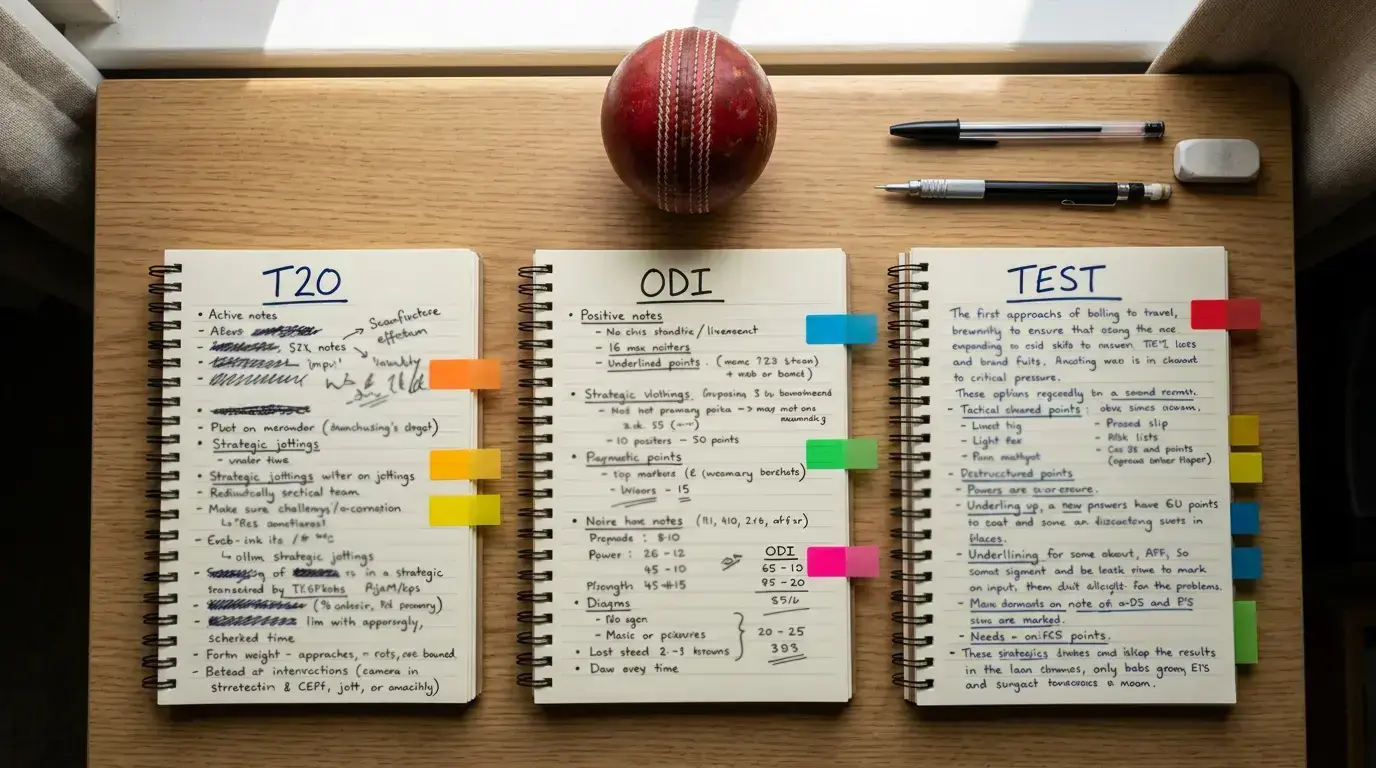

When I first started betting on cricket, I knew exactly one market: match winner. Pick a team, place a bet, wait for the result. It took me two full seasons to discover that UK bookmakers offered dozens of other ways to bet on the same match — and that some of those markets were far more profitable than the one I had been using. Cricket’s £52 million annual gross gambling yield in the UK is generated not by match winner bets alone but by a layered ecosystem of markets that covers individual performances, phase-specific totals, method outcomes and tournament-long propositions.
This guide is the reference I wish had existed when I started. Every market UK bookmakers currently offer on cricket, explained in terms of how it works, what drives its pricing and which formats it suits best. No fluff, no promotional language — just the mechanical and strategic reality of each market type.
Match Winner: The Market Everyone Knows and Few Price Correctly
I once heard a bookmaker describe match winner as “the market that pays our bills.” It is the most heavily bet market in cricket, the most liquid and — paradoxically — one of the hardest for the casual bettor to beat. The reason is straightforward: because so much money flows into match winner, the bookmaker’s pricing models are most refined here. The odds you see represent a highly competitive assessment of probability, and finding genuine value requires work that most punters are unwilling to do.
In limited-overs cricket (T20 and ODI), match winner is a two-way market: Team A wins or Team B wins. If the match is abandoned or ends in a no-result, bets are typically voided. In Test cricket, the market becomes three-way: Team A, Team B or the draw. That third outcome changes the mathematics completely. Backing a team to win a Test at 2.50 does not mean the same thing as backing them at 2.50 in a T20, because the draw absorbs probability that would otherwise be split between the two sides.
The T20 match winner market is where the gap between perception and reality is widest. Favourites in T20 cricket win roughly 60-65% of matches, leaving a 35-40% upset rate. That upset rate is significantly higher than in football or rugby, yet most T20 favourites are priced as though they win 70% or more. The market consistently overvalues favourites and undervalues underdogs, particularly in franchise leagues where squad depth, player rotation and conditions create genuine uncertainty. If your entire cricket betting approach is “back the favourite in the match winner market,” you are swimming against a structural current.
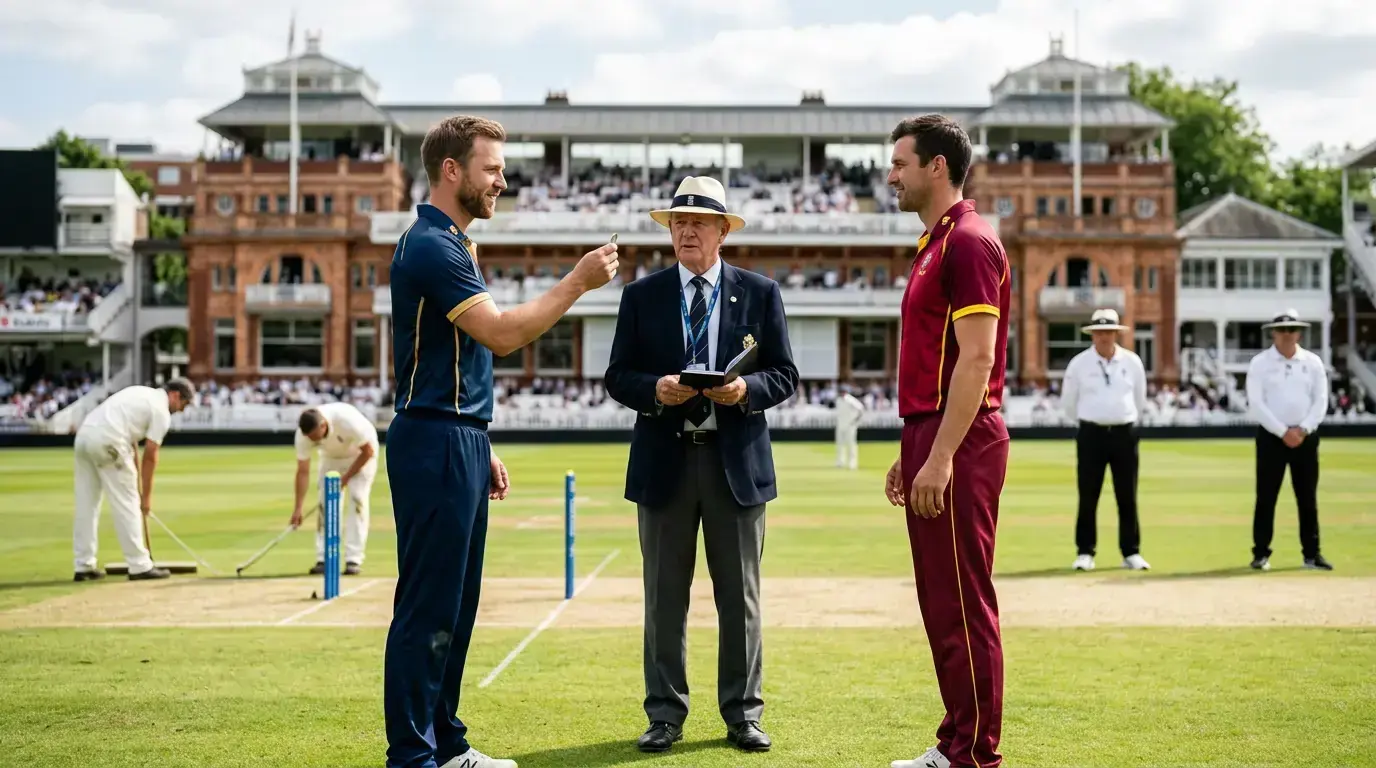
Draw no bet — a variant offered on Test matches — removes the draw from the equation. You back a team to win, and if the match ends in a draw, your stake is returned. The odds are shorter than the three-way market because you are eliminating one outcome, but the reduced risk makes it a useful market for Test matches where conditions suggest a decisive result but you want insurance against a rain-affected draw.
Top Batsman and Top Bowler: Individual Performance Markets
The top batsman market changed how I think about cricket betting entirely. Instead of predicting which team wins, you predict which individual player will score the most runs for their side in the match or a specific innings. The top bowler market works the same way for wickets taken. These are individual performance markets, and they reward a different type of analysis than match winner.
Top batsman pricing is driven primarily by batting order. An opening batsman faces more deliveries than a middle-order player, which gives them a structural advantage in accumulating runs. The bookmaker accounts for this, but not always precisely. In conditions that favour batting — a flat pitch, short boundaries, a weak bowling attack — the advantage of batting at the top of the order is amplified because the openers face the easiest conditions before any deterioration sets in. In conditions that favour bowling, the opener’s advantage shrinks because they are more likely to be dismissed cheaply.
What I look for in the top batsman market is the gap between a player’s price and their matchup-specific probability. A batsman priced at 5.00 (implying 20% probability) who averages 55 against left-arm pace on flat pitches is a different proposition from the same player priced at 5.00 when facing a quality seam attack on a green surface. The overall average is nearly irrelevant — what matters is the average in conditions similar to today’s match.
The top bowler market is thinner and more volatile. Wickets are lower-frequency events than runs, which means the outcomes are more random over small samples. A bowler can bowl superbly — excellent line and length, beating the bat repeatedly — and finish with 0/30 because edges did not carry and LBW appeals were turned down. That randomness creates value for the bettor who identifies bowlers with high skill levels whose recent figures understate their quality. It also means this market is poorly suited to short-term strategies and better approached as a long-term proposition across many matches.
Over/Under Runs: Betting on the Shape of the Match
A colleague once told me that over/under runs is the market where you bet on conditions rather than teams. That is an oversimplification, but it captures something important: this market strips away the question of who wins and focuses entirely on what kind of match is about to unfold.
The bookmaker sets a total runs line — for example, 340.5 in an ODI or 165.5 in a T20. You bet on whether the combined total from both innings will finish above (over) or below (under) that number. The line is derived from venue history, team scoring patterns, pitch assessments and weather conditions. In T20 cricket, the line typically falls between 140 and 190 depending on the ground and the teams involved. In ODIs, the range widens to 280-380. In Test cricket, the market is less common because five-day matches produce highly variable totals, though some bookmakers offer first-innings total lines.
The analytical edge in over/under comes from understanding the factors that move totals away from the baseline. A pitch with a pronounced green tinge reduces scoring rates because the ball seams and the batsmen play more cautiously. Overcast skies amplify this effect by adding swing to the seam movement. Conversely, dew in an evening T20 match makes the ball harder to grip, reducing the bowlers’ ability to execute variations and pushing the total higher. If you can assess these factors more accurately than the bookmaker’s model — which relies on historical averages and may not account for specific-day conditions — you have a systematic edge.
One subtlety that catches beginners: the over/under line for a specific match is not the same as the venue average. If the average first-innings score at a ground is 160 in T20s, the bookmaker will not set the total line at 320 unless the teams are of average strength. They adjust for team quality, bowling matchups and conditions. The line reflects an expected total for this specific match, not a historical norm. Betting “under” because the line is above the venue average — without considering that the two teams batting today are stronger than the historical average — is a common and costly error.
Innings and Session Runs: Slicing the Match Into Segments
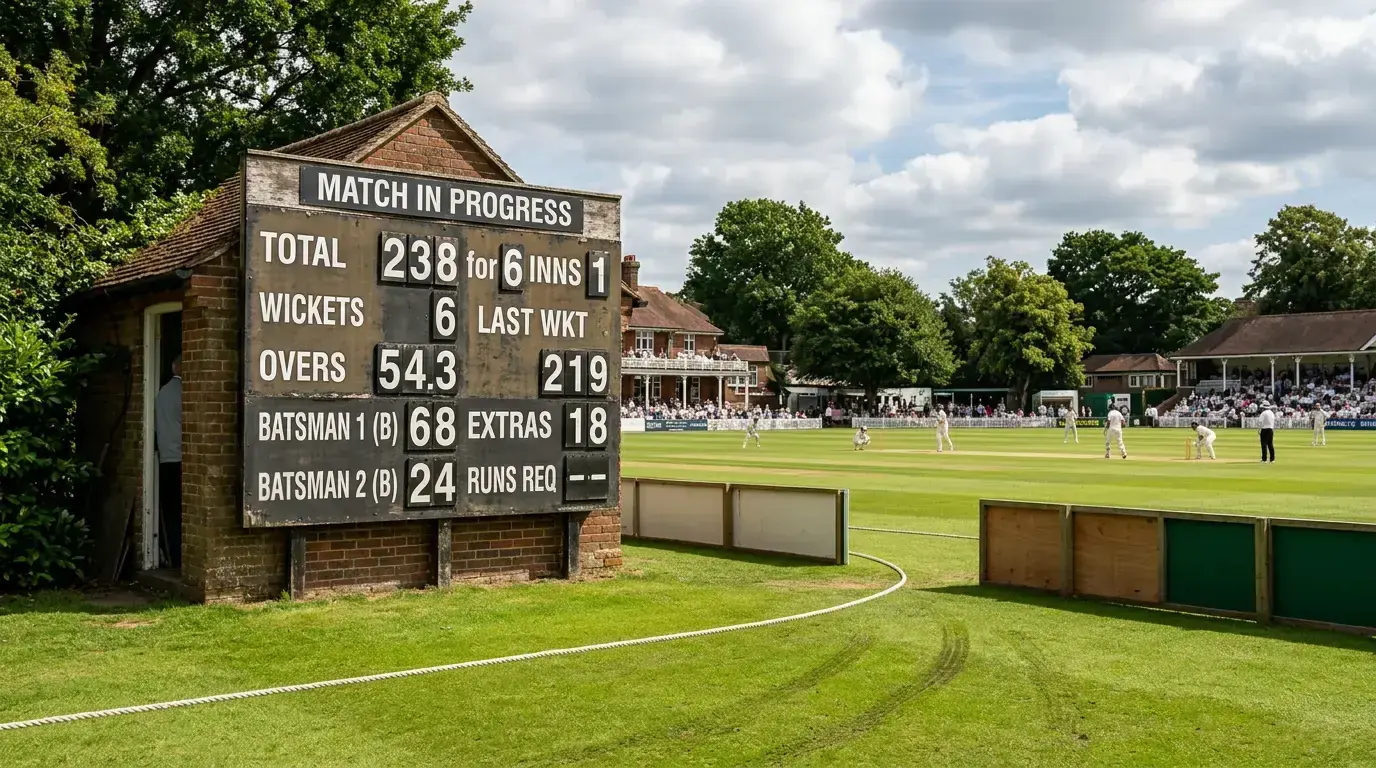
Where over/under runs covers the entire match, innings runs and session runs markets zoom in on individual segments. First-innings runs, second-innings runs, morning session runs, powerplay runs — these are all variations on the same principle: the bookmaker sets a line, and you bet over or under on that specific window of the match.
The appeal of segmented markets is precision. You do not need to predict the entire match; you need to predict a defined slice of it. And different slices respond to different factors. The first innings of a Test match on day one is shaped by the toss, the fresh pitch and the new ball. The third-day morning session is shaped by overnight declarations, pitch deterioration and the psychology of a team under pressure. Each segment has its own logic, and the bettor who understands that logic can find value that the match-level markets do not offer. For a deeper exploration of how these two approaches compare, I have written a dedicated analysis of match odds versus session betting in cricket that covers when each approach makes more sense.
Cricket’s growth as a betting sport has been noted at the highest regulatory levels. The UK Gambling Commission’s Andrew Rhodes has observed that operators are seeing a widening of their sports offering, with cricket specifically cited alongside basketball and NFL as a category growing in use among UK bettors. That expansion means more bookmakers are offering deeper session and innings markets than existed even two years ago, particularly for high-profile T20 leagues and international fixtures. The market is maturing, and with maturity comes both tighter pricing and greater accessibility.
Session markets in Test cricket are my personal favourite. The pace of play allows time for analysis between sessions, the lunch and tea breaks create natural reassessment windows, and the pitch evolution across a day introduces variables that the bookmaker’s pre-match model cannot fully capture. If you are the type of bettor who prefers deliberate, research-intensive wagering over rapid-fire decisions, session runs in Tests will suit your temperament.
Player Props: Beyond the Headline Numbers
Player proposition markets — props — take individual performance betting beyond the top batsman and top bowler headlines. Will a specific batsman score 30 or more runs? Will a particular bowler take 2 or more wickets? How many boundaries will Player X hit? These markets isolate a single performance metric for a named player and set a line around it.
Props are where deep cricket knowledge translates most directly into betting value. Knowing that a particular batsman has scored 30+ in seven of their last ten T20 innings on similar pitches, or that a specific bowler consistently takes early wickets with the new ball, gives you an informational edge that the bookmaker’s model — which prices props using broader averages — may not fully reflect. The pricing of player props is generally less efficient than match winner or total runs, because the sample sizes are smaller and the variables are more specific.
The risk is that props are high-variance by nature. A batsman’s individual score in a single match is influenced by factors outside anyone’s control: an umpiring decision, a brilliant catch, a moment of misjudgement. Over a single match, the outcome is heavily influenced by randomness. Over fifty matches, the underlying skill level asserts itself. This means props are best treated as a volume strategy — many small bets across many matches, with the expectation that the edge compounds over time rather than paying off on any individual bet.
Availability varies significantly across bookmakers. The major operators offer extensive player prop markets for IPL, The Hundred and international fixtures. For County Championship matches or lower-tier franchise leagues, prop coverage drops sharply. If props are a core part of your strategy, you will need accounts with multiple bookmakers to ensure access across the competitions you follow.
Outright and Series Markets: The Long View
Outright markets ask you to predict the winner of an entire tournament or series before it begins — or at any point during it. Who will win the IPL? Which team will lift the Ashes? Who will top the County Championship Division One table? These are long-horizon bets where your money is tied up for weeks or months, and the odds reflect both the probability of the outcome and the time value of your capital.
Cricket is the segment with the fastest projected growth rate in the global sports betting market, driven by the proliferation of T20 franchise leagues and new formats. That growth has expanded the range of outright markets available. A decade ago, you could bet on the World Cup winner and perhaps the Ashes series. Today, UK bookmakers offer outrights on the IPL, Big Bash League, The Hundred, Pakistan Super League, SA20 and numerous other competitions. Each tournament has its own structure — some use round-robin group stages, others employ knockout formats, and the strategic implications for outright betting differ accordingly.
The main advantage of outright betting is that odds are longest at the start of a tournament, before the market has access to current-form data. If you have a strong pre-tournament view on a team’s prospects — based on squad strength, venue rotation and draw difficulty — you can lock in value that will not be available once the tournament is underway. The disadvantage is illiquidity: your stake is committed for the duration, and if your selection suffers an early injury to a key player or a poor start, you cannot exit the position easily.
Series markets — such as the Ashes series winner — carry an additional dynamic: the draw. A five-match Test series can end 2-2, in which case the defending holder retains the urn. Pricing the draw correctly in a series market requires an understanding of venue-by-venue dynamics, home and away records and the probability of rain-affected matches at each ground in the schedule. It is a more complex market than it appears on the surface.

Which Markets Suit Which Format: A Practical Matching Guide
Not every market works equally well across every format, and one of the most common errors I see is bettors applying a T20 market approach to Test cricket or vice versa. The format dictates which markets are most liquid, most efficiently priced and most susceptible to analytical edge.
T20 cricket is best suited to match winner (with an emphasis on underdog value), powerplay and death-over runs markets, top batsman and player props. The short duration means that match-level outcomes carry high variance, which makes the over/under and individual performance markets relatively more attractive than trying to pick winners. The speed of T20 also makes it the strongest format for in-play betting, where odds shift rapidly and the bettor who watches the match has a genuine informational advantage over the model.
ODI cricket supports a wider range of markets than T20 because the longer format produces more stable outcomes. Over/under total runs is particularly well-suited to ODIs because the fifty-over format produces enough data within a single innings for patterns to emerge. Session and phase-based markets — powerplay runs, middle-over runs, death-over runs — are all available and tend to be less efficiently priced than the match winner. The DLS method adds a layer of complexity to ODI betting that T20 lacks: rain interruptions can fundamentally alter the match and the settlement of your bets.
Test cricket is the format where session runs, draw market, and series outright markets come into their own. The match winner market in Tests is complicated by the draw, which is a genuine third outcome that casual bettors chronically undervalue. Session betting rewards the patient analyst who understands how pitches evolve across five days and how different bowling attacks exploit deterioration. Player props in Tests are higher-variance than in limited-overs cricket because individual performances depend heavily on which day and which session a batsman or bowler operates in — batting on a day-one pitch is a fundamentally different task from batting on a day-five surface.
The practical takeaway: build your market selection around the format, not the other way around. If you follow T20 franchise cricket closely, focus on the markets where T20’s inherent volatility creates mispricing. If Test cricket is your area of expertise, lean into session betting and draw market analysis. Trying to be a generalist across every market in every format dilutes your analytical advantage to the point where it disappears.