
A friend rang me last summer, confused because two bookmakers had “different odds” on the same cricket match — one showed 5/2 and the other showed 3.50. He thought one was offering a better deal. They were the same price. That conversation reminded me that odds formats are the first barrier to entry in cricket betting, and it is a barrier that keeps people from making informed decisions. The UK cricket betting market generates approximately GBP 52 million in annual gross gambling yield, representing 2.2% of online sports betting turnover, and every penny of that flows through odds that many bettors do not fully understand.
Fractional Odds: The Traditional UK Format
Fractional odds are what you will see on the high street and across most traditional UK bookmaker displays. They express your potential profit relative to your stake. Odds of 5/2 mean that for every GBP 2 you stake, you win GBP 5 in profit — plus your stake back, for a total return of GBP 7. Odds of 1/4 mean that for every GBP 4 staked, you win GBP 1 in profit — a total return of GBP 5 on a GBP 4 stake.
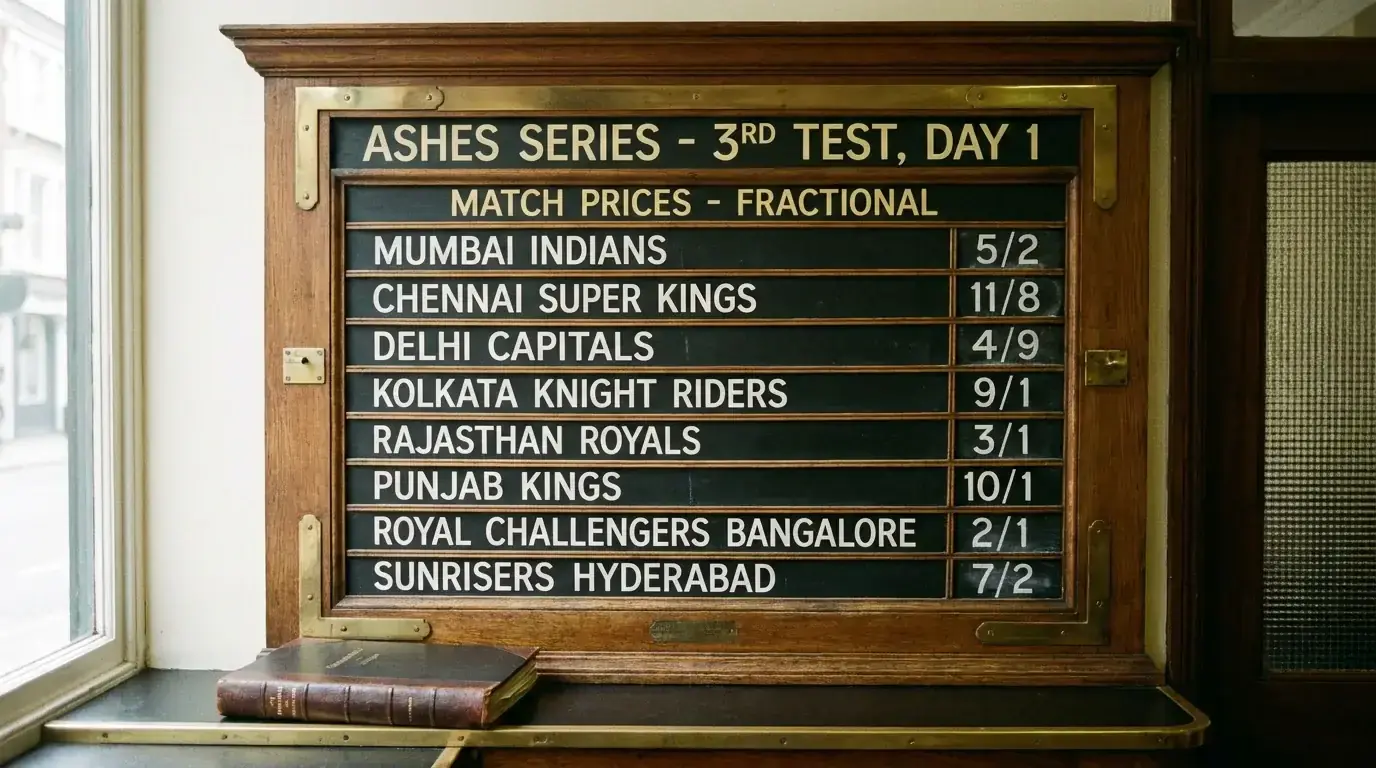
The numerator (top number) is your potential profit. The denominator (bottom number) is your stake. When the numerator is larger than the denominator (5/2, 3/1, 7/4), the selection is an underdog — you profit more than you risk. When the denominator is larger (1/3, 2/7, 1/5), the selection is a favourite — you risk more than you profit. “Evens” or 1/1 means your profit equals your stake.
Fractional odds have one practical advantage: they immediately tell you whether a selection is priced above or below even money. At a glance, 9/4 signals an underdog and 4/9 signals a heavy favourite. The disadvantage is that comparing prices across selections is harder. Which is better value: 11/8 or 6/4? You need to convert both to the same base to compare efficiently, which is why most analytical bettors — myself included — work primarily in decimal format and convert to fractional only when placing bets on platforms that default to it.
Decimal Odds: The Analytical Standard
Decimal odds express your total return per unit staked, including the stake itself. Odds of 3.50 mean a GBP 1 bet returns GBP 3.50 total (GBP 2.50 profit plus your GBP 1 stake). Odds of 1.40 mean a GBP 1 bet returns GBP 1.40 (GBP 0.40 profit plus your stake). The decimal format is cleaner for calculations because your total return is simply stake multiplied by odds — no need to separately add the stake back.
Every serious cricket betting model I have built uses decimal odds as the default format. The reason is mathematical convenience: converting decimal odds to implied probability is a single division (1 divided by odds), and comparing prices across selections is instant. Decimal 3.50 is a higher price than decimal 3.20 — no mental arithmetic required. Try doing the same comparison with 5/2 versus 11/5 in fractional format and you will see why decimals are the standard for analytical work.

Most UK bookmaker platforms allow you to switch between fractional and decimal display in your account settings. I recommend switching to decimal immediately and training yourself to think in that format. Within a week, you will read decimal odds as naturally as fractional, and your ability to spot value and compare prices across markets will improve significantly.
Converting Between Formats
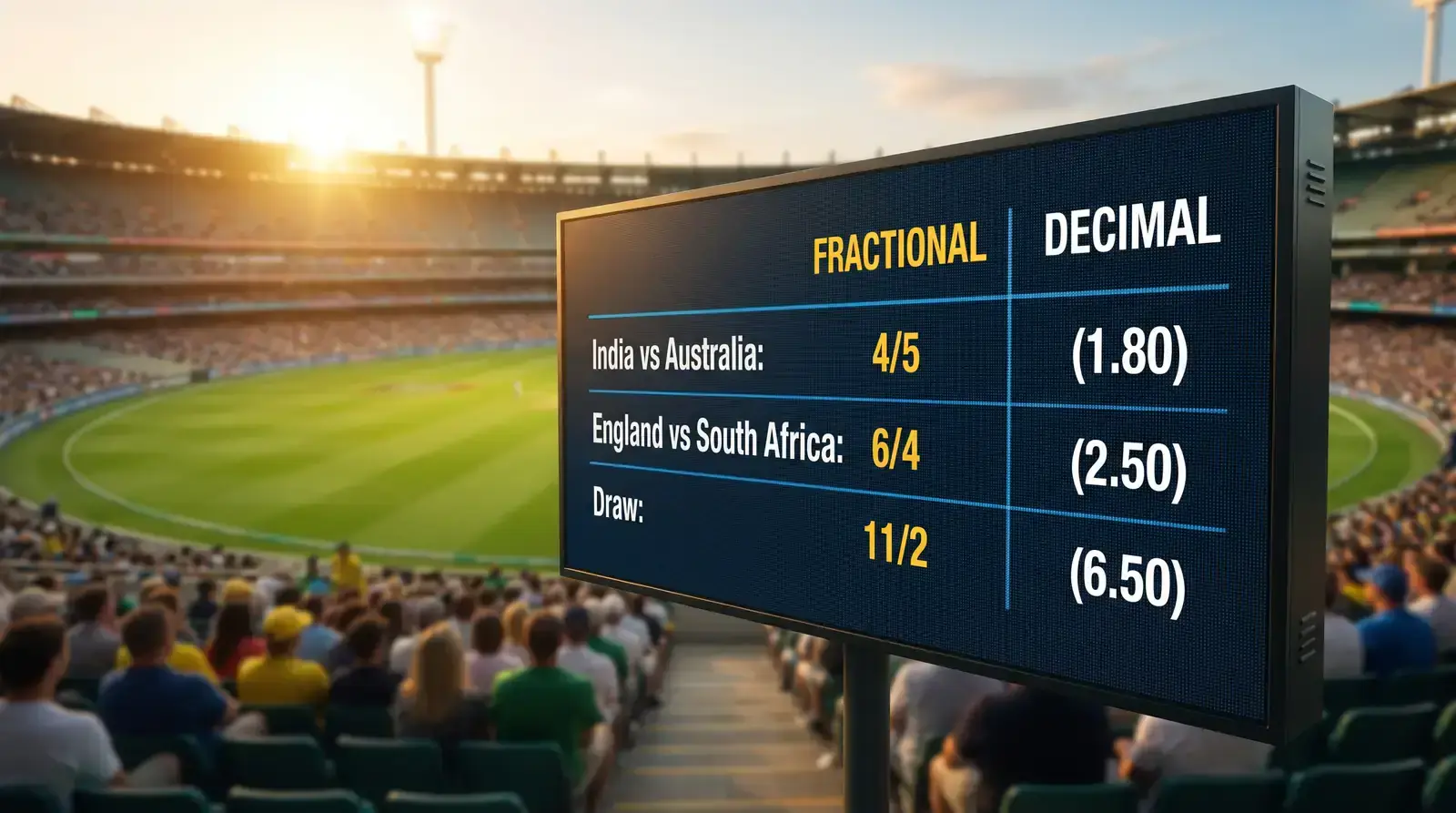
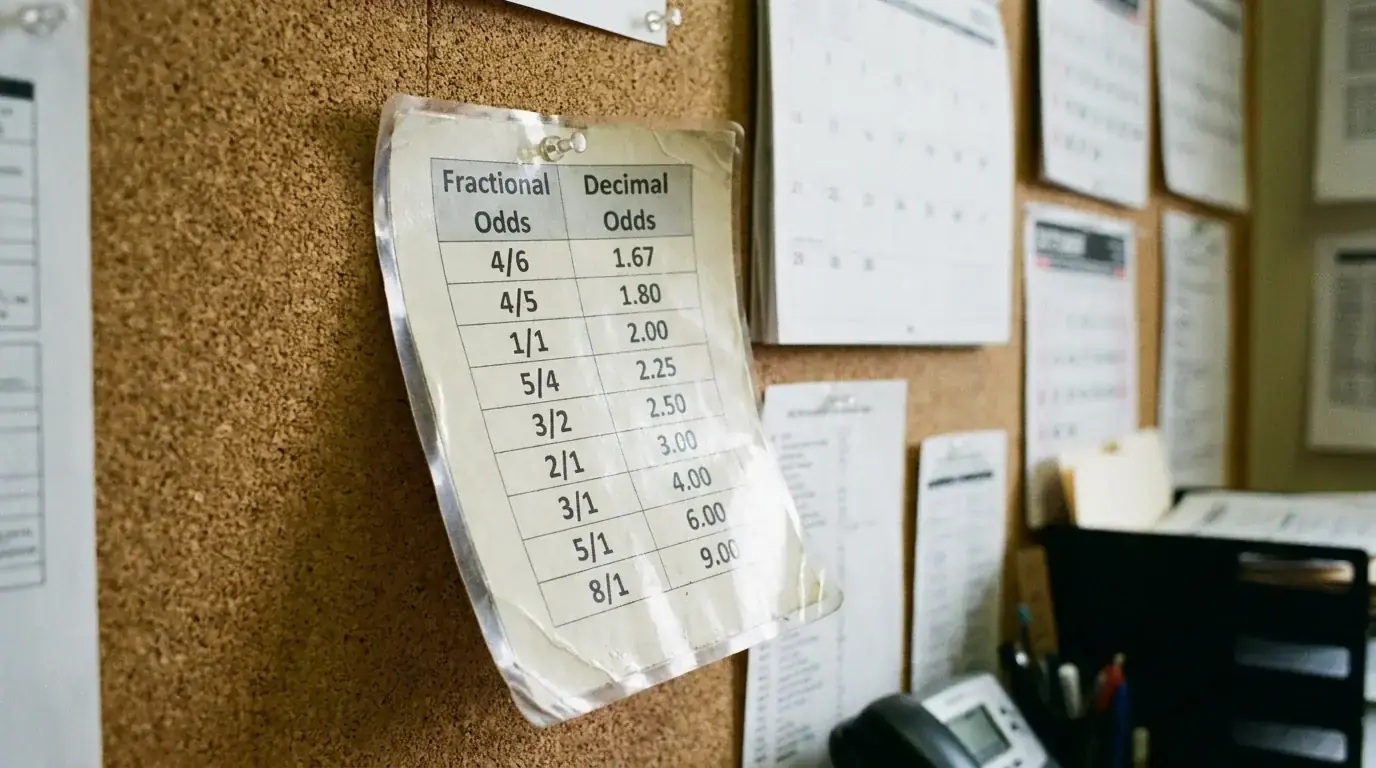
Fractional to decimal: divide the numerator by the denominator and add 1. So 5/2 becomes (5 divided by 2) plus 1, which equals 3.50. And 1/4 becomes (1 divided by 4) plus 1, which equals 1.25. Decimal to fractional: subtract 1 from the decimal, then express the result as a fraction in its simplest form. So 3.50 becomes 2.50, which is 5/2. And 1.80 becomes 0.80, which is 4/5.
The conversion you will use most often is odds to implied probability, because this is how you assess whether a price represents value. For decimal odds: implied probability equals 1 divided by the odds. So decimal 2.50 implies 40% probability, decimal 1.67 implies 59.9%, and decimal 5.00 implies 20%. For fractional odds: implied probability equals the denominator divided by the sum of numerator and denominator. So 5/2 gives 2 divided by 7, which is 28.6%. And 4/5 gives 5 divided by 9, which is 55.6%.
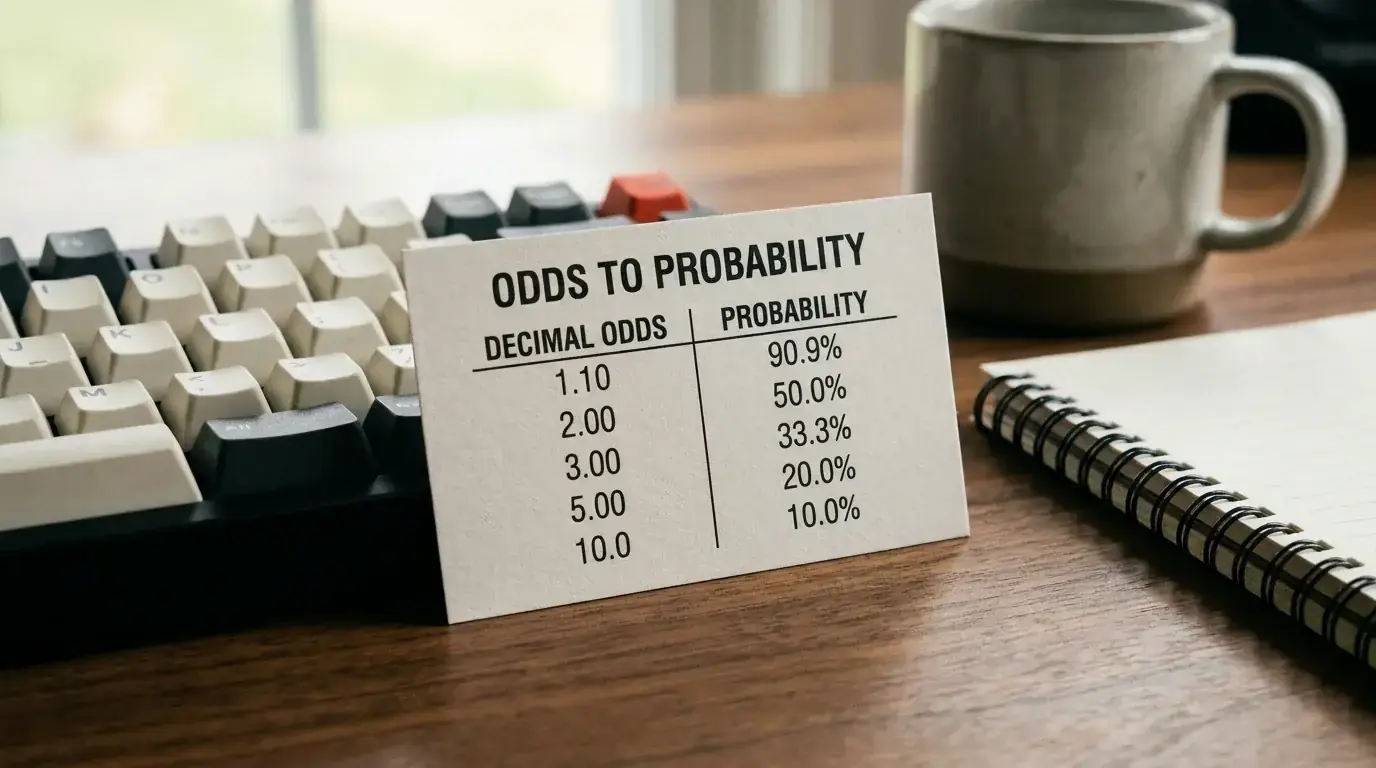
The global online sports betting market reached $78.96 billion in 2024, and the majority of that volume is priced in decimal format across European and Asian platforms. UK bettors who can think fluidly in both formats have a practical advantage when comparing odds across international bookmakers, some of which offer significantly better cricket prices than the standard UK operators. I routinely check three UK-licensed platforms and one European platform for every cricket bet, and the price differences on identical markets can exceed 5-8% — which translates directly to improved long-term yield.
The Bookmaker Margin: What You Are Really Paying
If a cricket match has two possible outcomes (ignoring the draw for simplicity), and the true probability of each outcome is 50%, fair odds would be 2.00 on each side. A GBP 100 bet on either side would return GBP 100 profit if successful, and the bookmaker would break even. Bookmakers do not break even — they build a margin into the odds, pricing both sides below fair value.
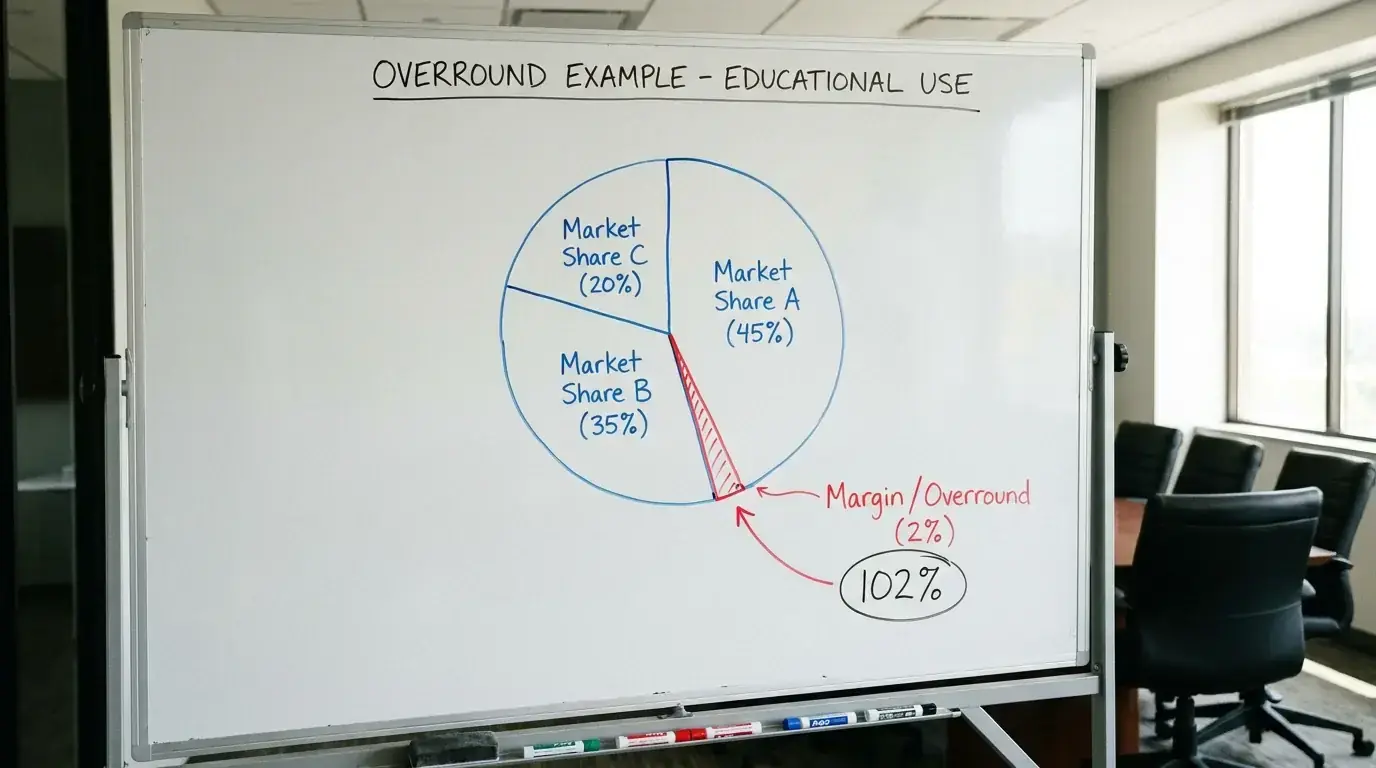
In practice, the bookmaker might price both sides at 1.91 instead of 2.00. Each side’s implied probability is then 52.4%, and the combined implied probability is 104.8%. That 4.8% excess over 100% is the bookmaker’s margin, also called the overround or “vig.” It is the bookmaker’s profit baked into every market. The lower the margin, the better the deal for the bettor.
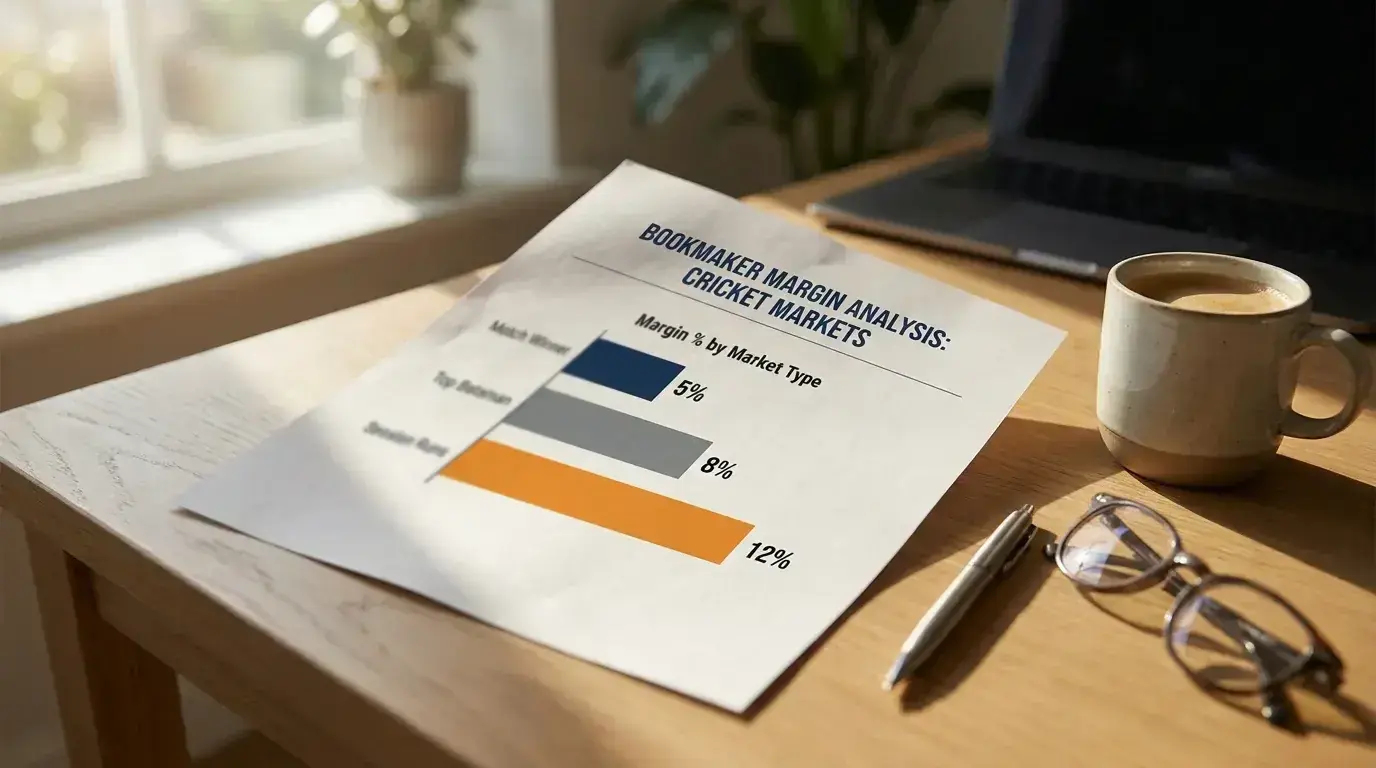
Cricket match-winner markets on major UK platforms typically carry margins of 4-7% for international matches and 6-10% for domestic competitions with less liquidity. Session runs and player prop markets often carry wider margins of 8-12%. I calculate the margin for every cricket betting market I trade by summing the implied probabilities of all outcomes — a three-outcome Test market (home win, away win, draw) with a combined implied probability of 108% has an 8% margin. Over time, I have found that margins tighten closer to match start as betting volume increases and the bookmaker’s pricing algorithm receives more data. Placing bets in the final hour before the toss, when margins are at their narrowest, is a small but consistent edge.