


A follower once sent me a screenshot of a Telegram channel promising “95% win rate IPL tips.” I asked him to calculate the implied profitability of a 95% strike rate at average T20 odds. He came back 20 minutes later and said, “That would make someone a millionaire in a month.” Exactly. And that is why the claim was nonsense. Free cricket betting tips flood the internet during every major tournament — particularly the IPL, where the search volume for predictions spikes enormously — and roughly 7% of UK sports bettors wager on cricket, many of them following free tips without questioning the source. Learning to evaluate tipsters is as important as learning to evaluate cricket matches.
Evaluating Tipster Credibility
The first question I ask about any tipster is: do they publish a verifiable, time-stamped record of their selections? Not a curated highlights reel, not a monthly summary showing only winning months, but a complete, date-stamped log of every tip they have ever posted, including losses. Without this, everything else is marketing.

A verifiable track record should include the date and time of each tip (posted before the event), the selection, the odds at the time of posting, the stake recommended, and the outcome. Independent verification platforms like Blogabet and Pyckio exist specifically to track tipster performance with tamper-proof timestamps. A tipster who refuses to use these platforms — or who posts tips only on their own website or social media where records can be edited — is not providing the transparency required for you to make an informed decision about following their advice.
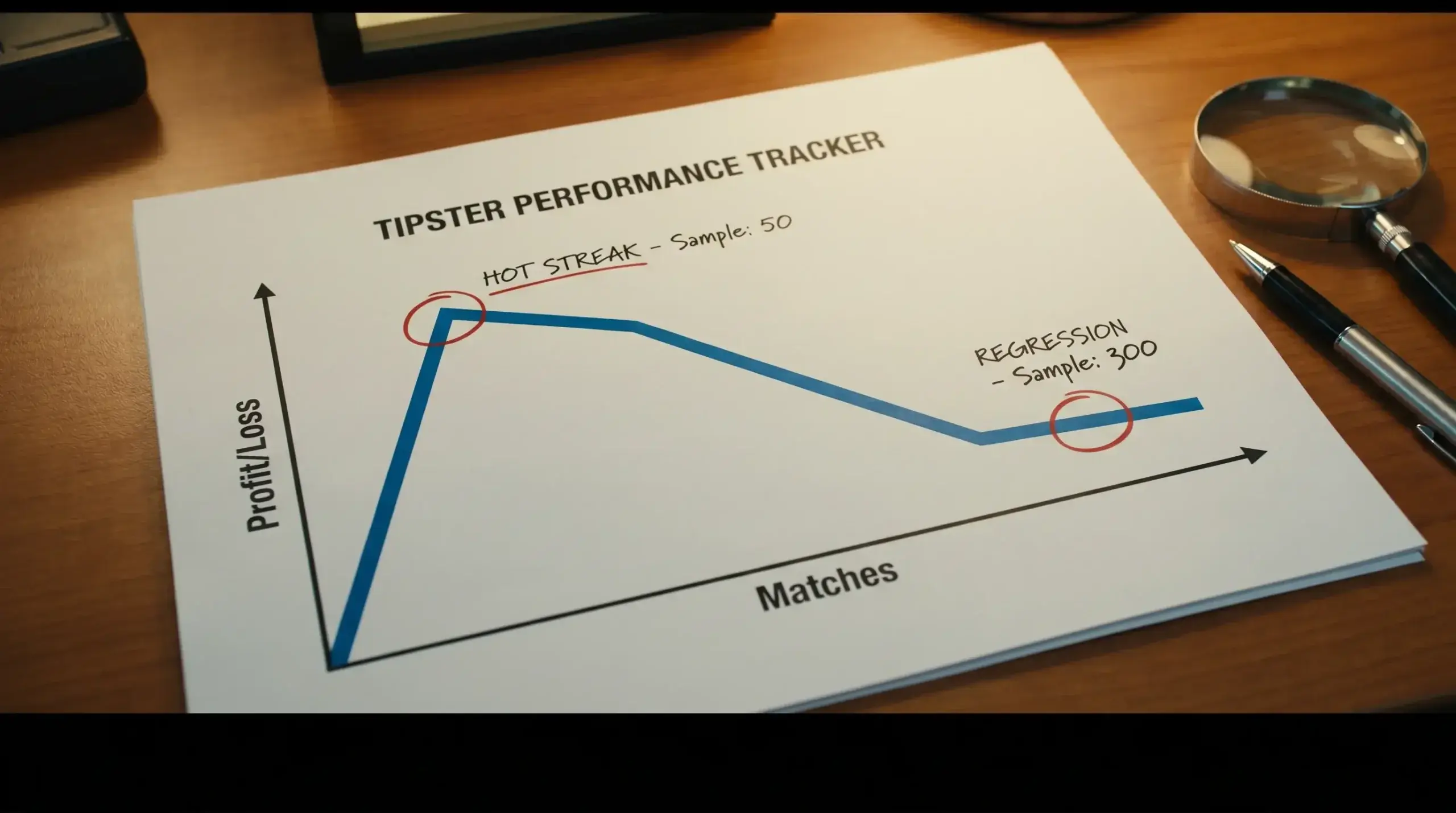
The minimum sample size for assessing a tipster’s performance is 200 bets over at least six months. Anything shorter is statistically meaningless — a 60% strike rate over 50 bets could easily be variance rather than skill. I have seen tipsters ride a hot streak of 30 winners in 40 bets, attract thousands of followers, and then regress to a 48% strike rate over the next 200 bets. The followers who joined during the hot streak lost money. The tipster’s long-term record, if they had published it honestly, would have shown the regression was inevitable.
Red Flags in Free Cricket Tips
Unrealistic win-rate claims are the most obvious red flag. A legitimate cricket tipster operating in T20 markets — where underdogs win 35-40% of matches — cannot sustain a win rate above 60-65% on match-winner tips over a meaningful sample. Anyone claiming 70%, 80%, or 90% is either lying or cherry-picking results. Sportradar detected 59 suspicious cricket matches in 2025 alone, which tells you that even the integrity of the sport itself faces challenges — the idea that a social media tipster has a crystal ball is absurd.

Vague tips are the second red flag. “India will win” at odds of 1.30 is not a tip — it is stating the obvious, and backing a 1.30 favourite requires a 77% win rate just to break even. Legitimate tips identify specific value: “India’s first-innings total will exceed the bookmaker’s line of 165.5 because the pitch at the Chinnaswamy has produced first-innings averages of 185 in the last five matches.” The reasoning should be transparent, the selection should be specific, and the odds should represent demonstrable value.
Pay-to-upgrade funnels are the third red flag. Many free tip services exist solely to funnel you toward a paid subscription, and the free tips are deliberately mediocre to make the paid service seem necessary by comparison. This business model creates an incentive to make the free tips lose, which is the opposite of what you want from someone advising you on how to risk your money. I am not opposed to paid tipster services in principle — some have legitimate track records — but be extremely sceptical of any free service whose primary purpose is selling you something else.

What Good Cricket Tips Actually Look Like
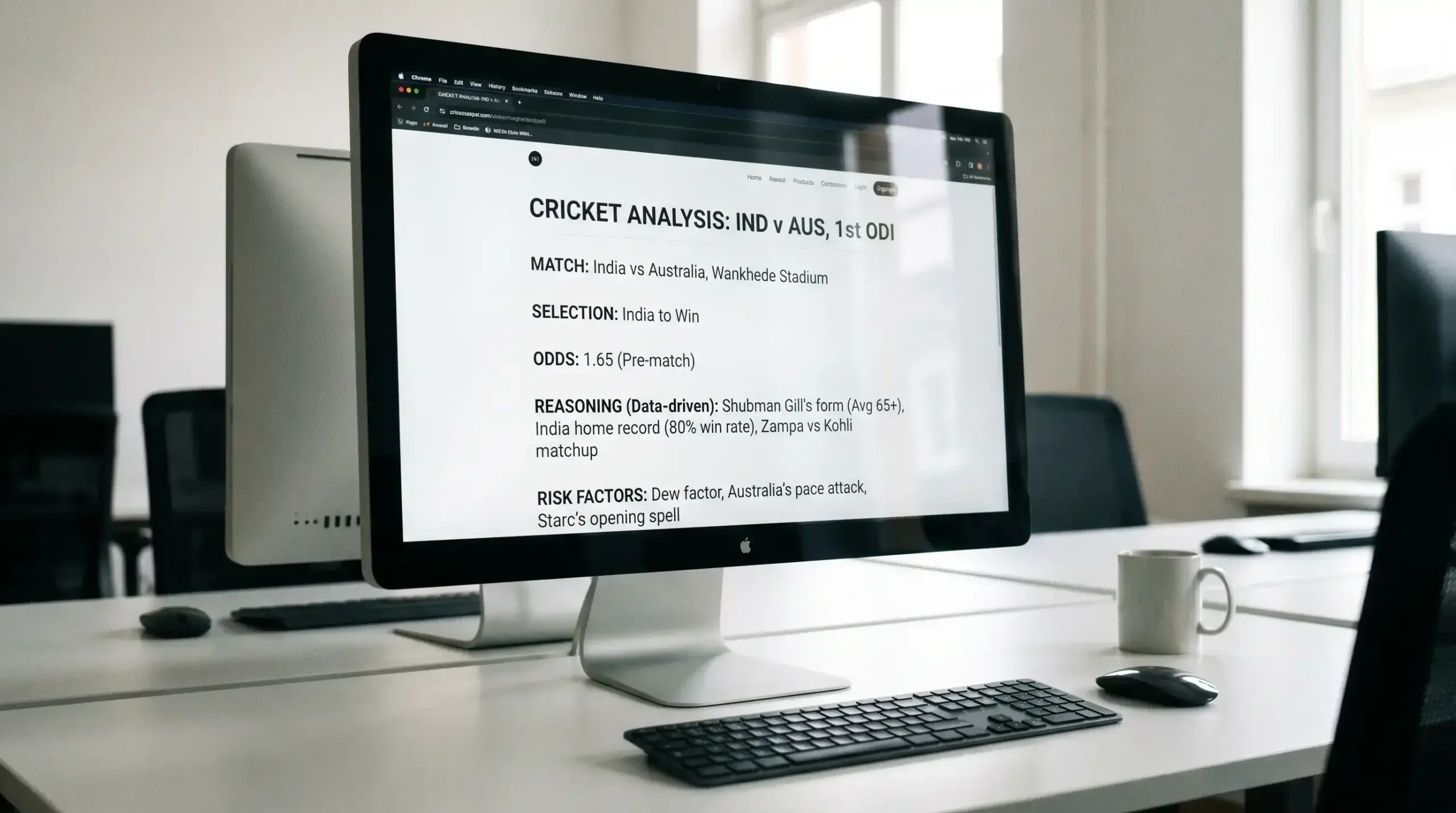
A good tip is a reasoned argument with a specific, actionable selection. It identifies the match, the market, the selection, the odds (at a named bookmaker or exchange), and the reasoning — including the data that supports the position. It also states the risk: what would need to happen for the tip to lose, and how likely that scenario is. A tip that only presents the bullish case is advocacy, not analysis.
Good tipsters publish losing tips as prominently as winning ones, because the losses are part of the education. If a tip loses, the analysis of why it lost — the bowler who was unexpectedly rested, the pitch that played differently than expected, the weather that intervened — is as valuable as the tip itself. I have learned more from studying why good analytical tips failed than from celebrating the ones that landed.
The best free cricket content I have found comes from analysts who are betting with their own money and sharing their thinking, not from services that monetise through volume of followers. The distinction matters: someone risking their own bankroll on their analysis has a financial incentive to be right. Someone monetising through followers has a financial incentive to be popular, which is a different objective entirely. Look for the former and ignore the latter.
Building Your Own Analysis Instead of Following Tips
The most reliable cricket betting tips are the ones you generate yourself, and building that capability is more accessible than most people think. Start with one format — T20 is a good entry point because the matches are frequent and the data is abundant. Track prediction sources and statistical models to understand how probabilities are generated. Build a simple spreadsheet that records venue averages, team form, and head-to-head records. Compare your estimated probabilities to the bookmaker’s odds before every match, and log whether the outcome aligned with your estimate or the bookmaker’s.

After 100 matches of this exercise, you will have a clearer picture of where your analysis adds value and where it does not. Maybe you are excellent at predicting T20 totals but poor at picking match winners. Maybe you spot pitch-condition edges but miss team-news developments. This self-knowledge is worth infinitely more than any free tip, because it tells you where to focus your energy and where to sit out.
The transition from following tips to generating your own analysis is the single most important step a cricket bettor can take. It takes time — I spent a full year tracking my analysis against actual outcomes before I started betting with real confidence — but the result is a sustainable edge built on your own understanding rather than someone else’s claims.
