
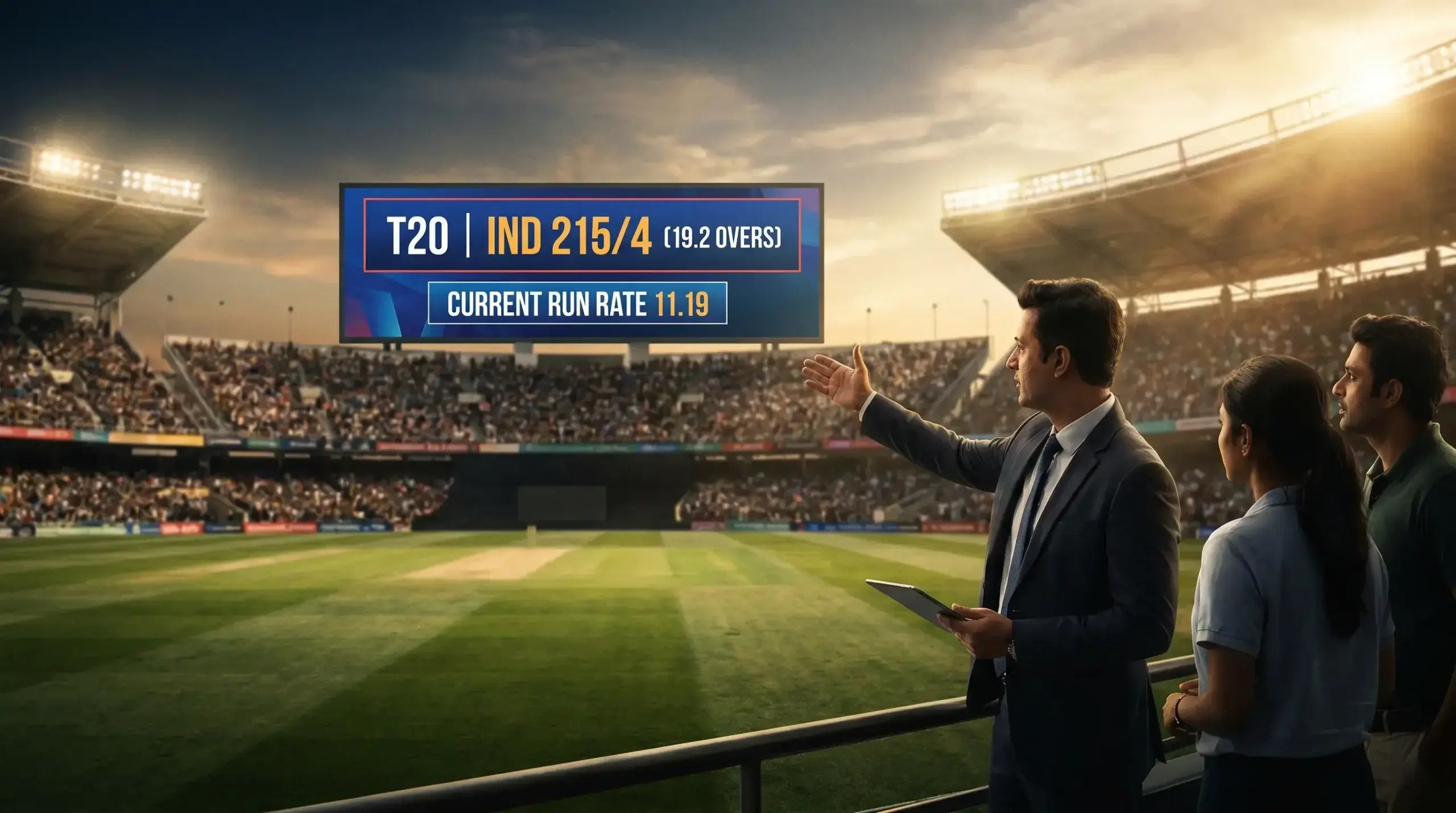

The first time I consistently beat the cricket totals market was during the 2020 IPL in the UAE. Every match was played at one of three grounds — Abu Dhabi, Dubai, and Sharjah — and the bookmakers initially set their lines based on historical Indian venue data rather than the local conditions. Sharjah’s postage-stamp boundaries produced scores that blew through the posted over/under lines for the first two weeks. By tracking the actual scoring rates at each ground and adjusting faster than the bookmaker, I landed 14 of my first 18 over/under bets that tournament. Totals betting in cricket is fundamentally an information speed game: whoever updates their model faster wins.
How Bookmakers Set Total Runs Lines
The over/under line on a cricket match is the bookmaker’s estimate of the combined total runs scored by both sides (in limited-overs) or the first-innings total (the more common format in Test markets). Bookmakers set this line using a blend of venue average scoring data, squad batting and bowling ratings, and recent form at the ground. In T20 cricket, where favourites win only 60-65% of matches, the totals market attracts bettors looking for a less binary proposition than match winner — you do not need to pick the winning team, just the scoring trajectory.
The line-setting process matters because it reveals where the bookmaker’s model is weakest. Most algorithms anchor heavily to the venue’s historical average — say, 340 combined runs for a T20 at the Chinnaswamy in Bangalore. But that average includes matches played in different years, different seasons, under different conditions. A match played in October on a fresh pitch under clear skies will score differently from one played in March after heavy use during the domestic season. The bookmaker’s model smooths these differences; your model should capture them.

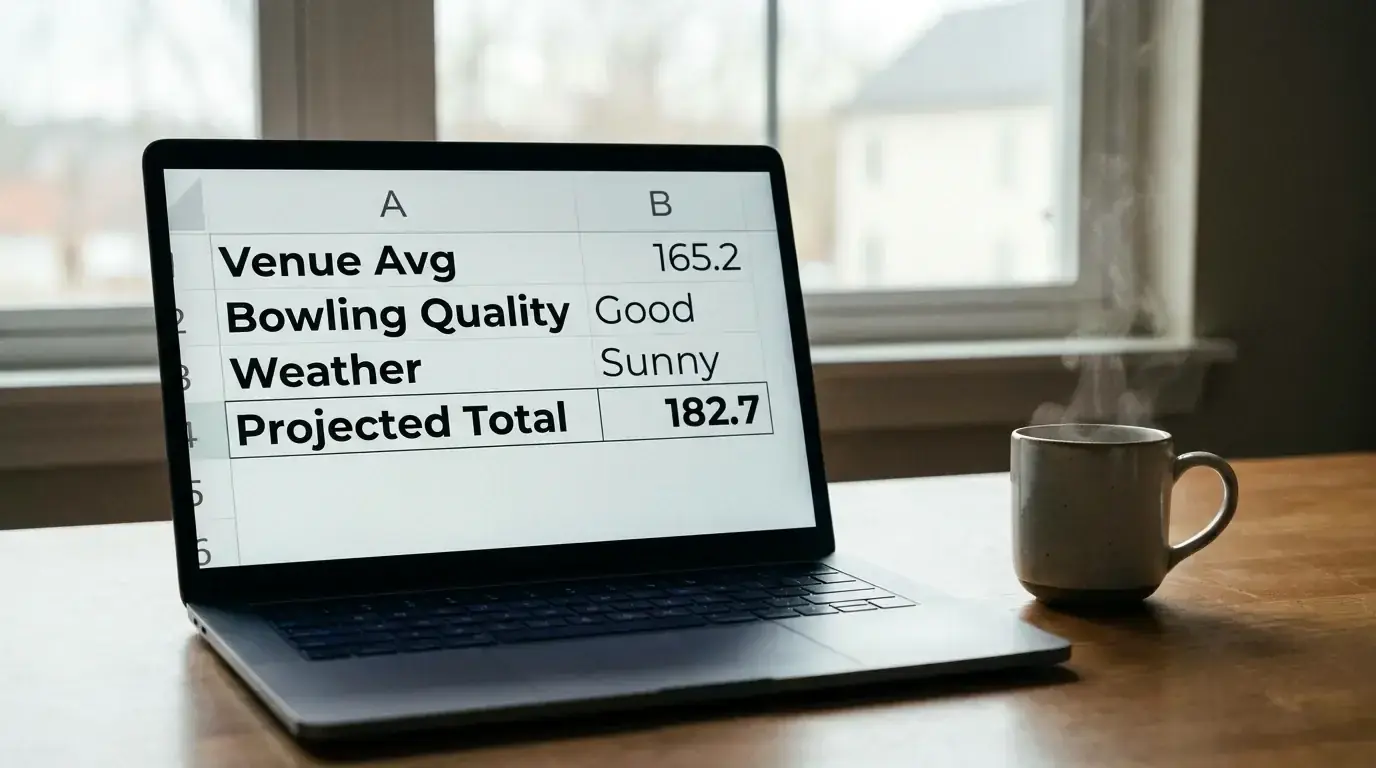
I build my own projected totals for every cricket match I bet on, using three inputs: the venue’s rolling ten-match average (not the all-time average), the specific bowling attack quality of both teams (adjusted for conditions), and the weather forecast. When my projected total diverges from the bookmaker’s line by more than 8-10 runs in a T20 or 15-20 runs in an ODI, I consider it a tradeable discrepancy.
Conditions That Move Total Runs Lines
Pitch conditions are the primary driver of total runs variation, and they are also the variable the market is slowest to price. A pitch that has been baked under sun for a week before a T20 will be harder, faster, and more batting-friendly than one prepared under cloud cover with residual moisture. The IPL’s 2025 dry ball replacement rule demonstrated how a single regulatory change shifts scoring patterns — chase win rates on dew-heavy grounds dropped from roughly 60% to 51-52%, which indirectly affected total run expectations because the second-innings scoring rate compressed.
Boundary dimensions and outfield speed are surprisingly underweighted by bookmaker algorithms. A ground with short straight boundaries and a fast outfield — Sharjah, Chinnaswamy, Trent Bridge — will naturally produce higher totals than a ground with long boundaries and a slow outfield, even if the pitch quality is similar. I maintain a database of ground dimensions for every venue I model and factor boundary distances into my projected totals. When a T20 moves to a smaller ground for logistical reasons — something that happens regularly in bilateral series — the totals line is often set before the venue dimensions are fully accounted for.
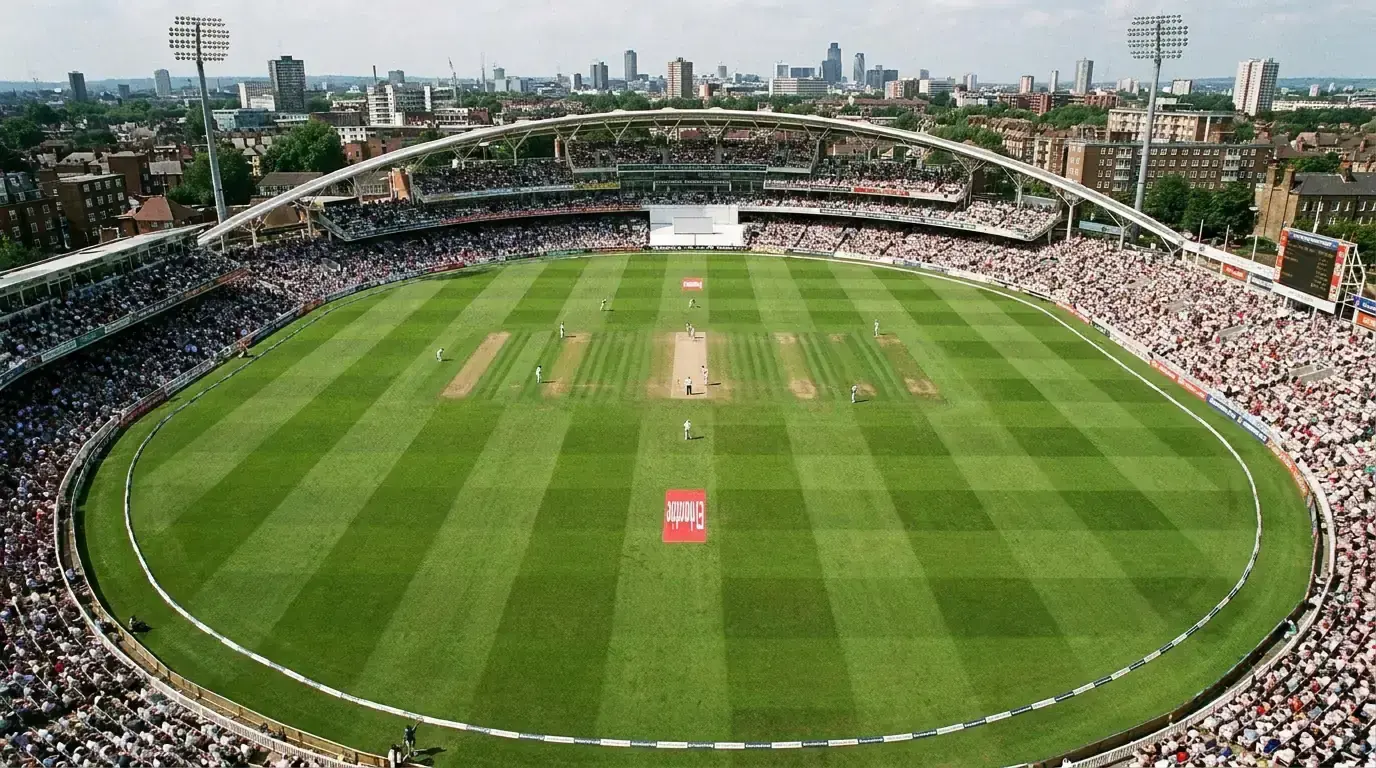
Weather effects on totals are more nuanced than “rain equals lower scoring.” Overcast conditions suppress scoring through swing and seam movement, but hot, still conditions can also lower scoring rates if the pitch is dry and slow, producing low bounce and making stroke-play difficult. Wind affects totals at specific grounds where crosswinds carry shots over short boundaries. I combine pitch, weather, and ground-dimension data into a single conditions score that modifies my baseline projected total upward or downward by up to 15%.
Format-Specific Total Runs Patterns
Typical T20 international combined totals in 2024-2026 sit around 310-340 runs at neutral venues, though this range swings wildly by ground and conditions. At batting paradises like the Chinnaswamy (average first-innings T20I score above 180), the combined total regularly exceeds 360. At bowling-friendly venues like the Wanderers in Johannesburg under overcast skies, combined totals drop below 290. The bookmaker sets one line; the actual range spans 70+ runs depending on conditions.

ODI totals follow a different pattern. The par first-innings score in ODIs has climbed steadily over the past decade and sits around 280-310 at neutral venues. The middle overs (10-40) are where ODI totals are won or lost, because the powerplay and death-over phases produce relatively predictable scoring rates. A team that accelerates through the middle overs — maintaining 5.5+ runs per over from overs 15-40 — will post a total 30-40 runs above the team that consolidates at 4.5 through the same phase. I weight middle-over run rate more heavily than powerplay or death-over rate when projecting ODI totals.
Test match totals markets usually cover the first-innings total or the match aggregate. Live betting accounts for 55-60% of all cricket bets in the UK, and Test totals markets see significant in-play action as the pitch evolves. A first-innings total line of 350 looks right at the start of day one but may need downward revision by 40-60 runs if the pitch deteriorates faster than expected. I use the day-one scoring rate to recalibrate my total projection for each subsequent day, and the adjustment often reveals value in the session and innings totals markets.
Spotting Mispriced Lines Before They Move
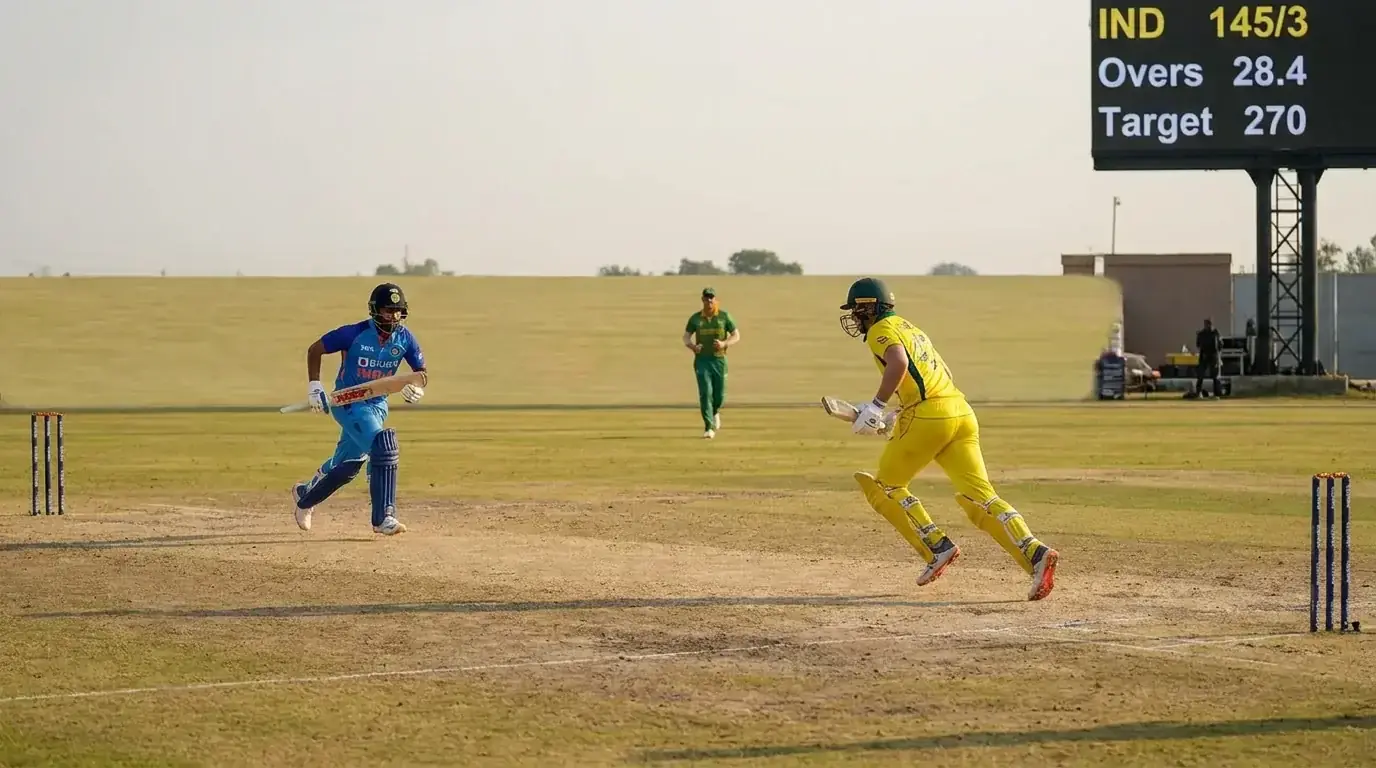
The totals market misprices most often in two situations: when a match is played at an unusual or recently refurbished venue, and when late team news changes the bowling attack composition. If a match moves from Mumbai to Pune due to scheduling changes, the bookmaker’s algorithm may set the line based on Mumbai’s higher-scoring profile until the venue correction is made — a window that can last several hours.
Late bowling changes have a direct impact on projected totals. If a team replaces a frontline spinner with a medium-pace allrounder on the morning of the match, the bowling attack’s overall quality changes in a way that should move the total line. I monitor team news feeds obsessively on match day, and when a bowling change is announced, I immediately recalculate my projected total and compare it to the unchanged bookmaker line. The window for exploiting this is narrow — 15-30 minutes before the bookmaker’s trading desk updates the line — but the edge is genuine and repeatable across a season.

My final filter before placing a totals bet is to check the line movement across three bookmakers. If all three have moved the line in the same direction since opening, the market has received information I may not have. If the lines are static or moving in different directions, the market is uncertain, and my independent analysis carries more weight. Converging line movement is a signal to proceed cautiously; diverging movement is a signal to trust my own numbers.
